

- Ages 5–8
- 8 learning areas
- Live support
Give your child a strong start without rushing childhood.
Playful, multi-sensory activities build the foundations for international early-years benchmarks — with plenty of movement, discovery and fun.
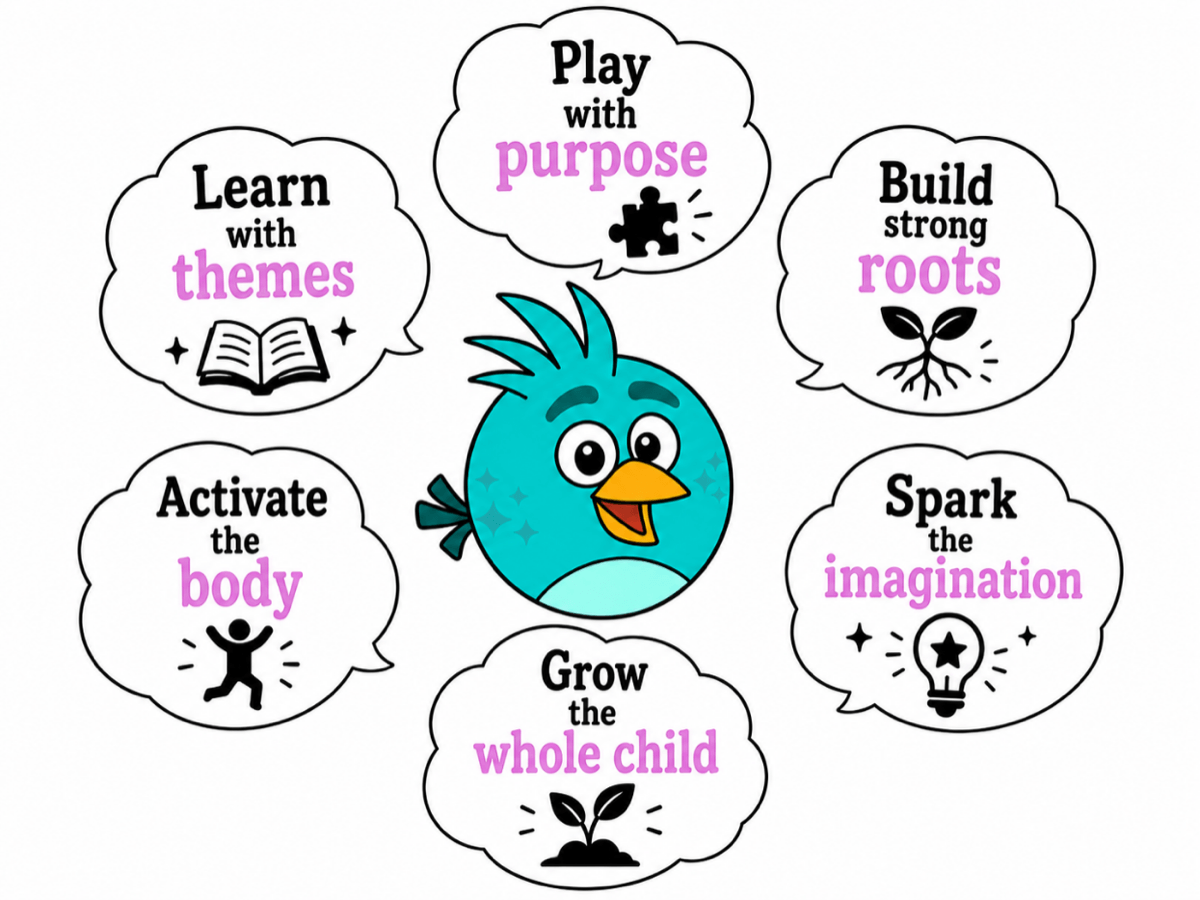
Strong roots, from the start
The early years are when the brain lays its foundations — for how a child sees, moves, pays attention and reasons. Early Starters strengthens these skills through play, alongside those first joyful steps into reading and numbers.
Build the foundations well now, and everything that follows has something strong to grow from.

Making homeschooling work for you


Built for Multi-Age Family Learning
Teach your children together instead of running separate streams — each at their own level.

Completely Adaptable to Your Family’s Rhythm
Set the depth and speed that works for your home, free from external pressure.

Plug-and-Play, Still Flexible
Every week is planned to make your life easier.We give you support every step of the way
Join a weekly live video call with the programme creator — an experienced homeschool mother with an M.Ed. — for practical guidance, questions, troubleshooting and support tailored to your child.
- Weekly live support with the programme creator
- Personalised guidance for your child and family
- Full access to the Saintsburg LMS on any device
- All weekly activities, downloads and learning outcomes
- A simple way to upload evidence of learning across each learning area
- Ongoing support for as long as you’re enrolled

Integrated, activity-based learning:
Far beyond reading and maths — equal attention goes to the perceptual, motor, reasoning and organisational skills that wire a young brain for lifelong learning.

Organisational Skills
Builds planning, preparation, sequencing, and follow-through so learning flows smoothly and independently.
Logic Reasoning
Develops structured thinking through patterns, comparison, categorisation, and decision-making.
Gross Motor Skills
Strengthens balance, coordination, rhythm, and body control to support attention, sequencing, posture and regulation.
Mathematics
Builds mathematical reasoning through patterns, quantities, models, and problem-solving so numbers become meaningful and transferable.
Perceptual Skills
Develops visual and auditory processing needed for tracking, organisation, accuracy, spatial awareness, and efficient learning.
Reading
Teaches children to decode, understand, and enjoy rich texts through strong sound-to-print reading foundations.
Writing
Develops confident written communication by connecting sounds, ideas, and meaning while strengthening organisation and expression.
Fine Motor Skills
Builds hand strength, coordination, precision, and tool control so children can create, write, build, and work efficiently.A 3-Year Journey. 4 Terms per year.
Each week, in all eight areas, you choose from four kinds of activities — 20 to select from in total. Pick any 10 that fit your child, your space, or your family. The same skills are mastered, regardless of your selection.

3D Outdoors
Big movement, real materials, learning outside.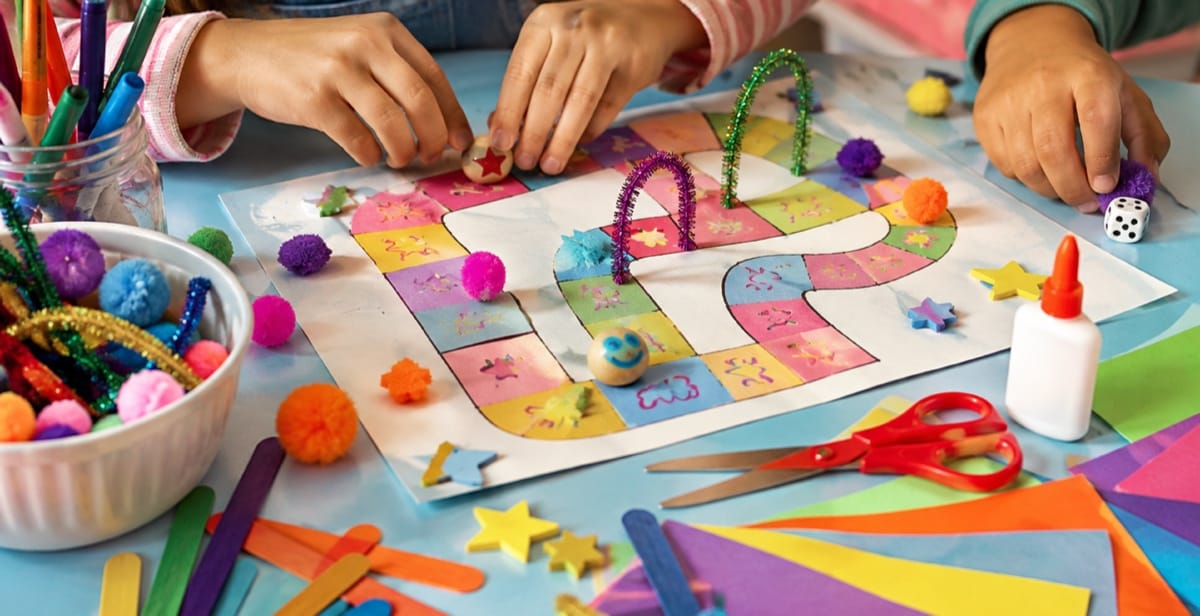
3D Crafty Games
Make it, play it, glue it, win it.
2D Desk Activities
Focused work at the table, with paper, pencils and thinking.
Curated Screen Time
Chosen, purposeful screen work — never filler.One programme, every age at once.
The programme grows with your child across three levels, building the same key skills at increasing depth. As learners progress, activities develop from early reasoning, movement, number, reading and writing foundations into stronger problem-solving, comprehension, coordination and independent thinking — so each child can work at the level that suits them while still following the same learning journey.
The structure flexes; the outcomes do not.
Start at any point during the year. Stretch the 9-week term over 12 weeks or compress it into 6.
Move up or down between levels when needed, or place one child on a different level for each learning area. Pause when you need to.
Celebrating skills mastered.
Every term closes with a project week. Children take what they’ve explored and apply it to a creation of their own design — combining new skills to build a theme-based project to be genuinely proud of.

Free Eclectic Add-Ons
On joining Saintsburg, you unlock full access to the following top-tier learning platforms — ready to use at your family’s unique pace, with zero added pressure.

Children's e-library
- 8 000+ children’s e-books across many genres
- Web + mobile access
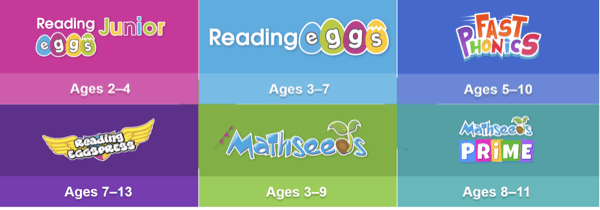
English & maths — ages 2–13
- Six levelled programmes from age 2 to 13
- Self-paced reading, writing and mathematics

The early bird catches the worm. Enrol your fledgling.
Not sure which plan fits? Watch a sample lesson to see it in action, or talk to us and we’ll help you choose.

FAQ’s
Early Starters is designed for children aged 6 to 8. You can begin at any time of the year since this programme is own paced. Younger children may also enjoy selected activities from five of the eight learning areas available. You can integrate Mathematics, Reading and Writing when they are ready for them.
Early Starters includes Logic Reasoning, Perceptual Development, Reading, Writing, Mathematics, Fine Motor Skills, Gross Motor Skills and Organisational Skills. These eight areas work together to build strong academic foundations while also developing movement, perception, planning, reasoning, creativity, problem solving and growing independence.
Early Starters is not a classroom programme moved into your home or a pile of worksheets to keep children busy. It combines brain-friendly learning methods with internationally aligned outcomes. This is expressed through games, role play and highly interactive learning. Children master important skills while thinking, moving, creating, questioning, solving problems and discovering that learning can be exciting.
A typical Early Starters week includes three learning blocks per day on four days of the week. You choose activities from the available options and shape the blocks around your child and family rhythm. A suggested daily programme and weekly planners are provided for families who would like to use them. Fridays are kept for Friday Funtimes, outings, parent support and theme exploration, creating a rhythm that is structured, manageable and still wonderfully flexible.
Each learning area offers four activity categories, with a total of 20 activity ideas available every week. These categories are Outdoor Activities, 3D Crafty Games, 2D Desk Activities and Curated Screen Time. You choose approximately 8 to 10 activities that suit your child and environment. You may select from only two or three categories or choose a little from all four groups. The direction is clear, but the choice remains yours. You may base your decisions on which materials and tools you already have available at home or use the idea and replace the suggested materials with something different.
Yes. Each term contains eight learning weeks and a project week in Week 9, but you do not have to complete it in exactly nine weeks. Your family may work through the term in six weeks, twelve weeks or another rhythm that suits your child, your circumstances and your homeschool.
Yes. Children do not always develop at the same pace in every learning area. Your child may use Level 1 for Reading and Writing, Level 2 for Mathematics and Level 3 for Gross Motor Development. This allows you to meet your child where they are without holding them back or pushing them ahead everywhere at once.
Struggling does not always mean that your child cannot do the work. Learning to stay with something hard a little longer is part of growth. Each activity is written as a challenge, and questioning is encouraged. Your role is to work alongside your child and model how to notice, think, try, adjust and try again. You can support the process without solving the problem for them. Each learning area has a “Playbook” to help you facilitate the activities.
Theme-based learning gives children a meaningful reason to practise new skills without it feeling like “work”. The theme is not simply a cute picture added to an activity. It creates the problem, purpose or situation, while the learning skill helps the child respond. This makes learning feel connected, memorable and relevant rather than like a collection of unrelated tasks.
Yes. Early Starters provides two themes per term, so you can select the one that your child is most interested in or that works best for your family. The theme connects activities across the learning areas and gives children opportunities to read, write, calculate, reason, move, build, create and explore within one engaging and meaningful context. It becomes the golden thread through the week and the whole term. It is the perfect way to keep a child engaged and keep curiosity at the centre of learning.
The Early Starters themes align with Junior Saints. If you have an older child using Junior Saints, you can choose the matching Early Starters theme so that your family explores the same theme during that term. Each child works at the correct level, while shared conversations, outings and discoveries become easier to enjoy together.
Friday Funtimes create space for outings, shared experiences and deeper theme exploration. They allow children to take their learning beyond the usual activity space and connect it with real experiences. Fridays can include discovering, exploring, talking, playing and enjoying the theme together without turning every moment into a formal lesson.
Week 9 is Project Week and replaces a traditional end-of-term assessment. Your child brings skills and knowledge from the term together in a meaningful project. This gives your child an opportunity to apply, create, explain, solve problems and show what they understand without relying only on a test or worksheet.
You will receive clear activity directions, outcomes for the first and second halves of each term, weekly skills to master and an explanation of why they matter. Friday parent support meetings provide additional guidance and a place to ask questions. The aim is to give you flexibility and choice while still offering the clarity and peace of mind you need.
It is written for homeschoolers by a former homeschooler, teacher and educational psychologist. It provides clear direction to give you peace of mind, as well as the flexibility to adapt it to your family. Early Starters gives you clear outcomes, skills, directions and a predictable weekly rhythm, so you do not have to wonder whether you are doing enough. It also gives you choices about activities, themes, pace and levels, allowing you to build a programme that fits your child without losing direction.