Thinking of taking your child out of school? Start here.
A calm walk through what actually matters in the primary years — so the decision feels less like a leap in the dark.

Deciding to take your child out of school is a big step, and it rarely comes without push-back — from the school, and sometimes from family who mean well. If you're weighing it up, this is a calm walk through what actually matters in the early years, so the decision feels less like a leap in the dark.
Do you have to wait until the end of the year?
The most common advice nervous parents hear is “just finish out the year first.” It sounds sensible, but there's no rule that makes it necessary. If the current environment isn't working, another two terms of it can cost more in a child's confidence and wellbeing than it gains in academics — and those early years are exactly when a shaky, stressed start does the most damage.
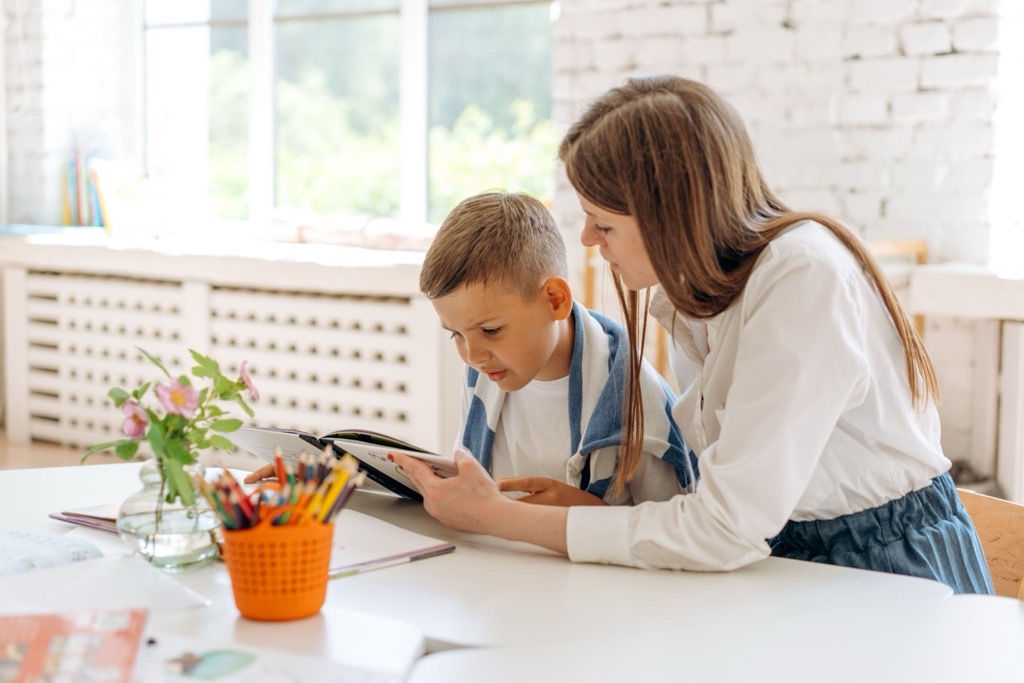
Simply sitting at a desk doesn't guarantee learning is happening. What a young child needs most is attention that meets them where they are, and that's far easier to give one-on-one at home than in a class of thirty.
Will my child fall behind?
This is the fear underneath almost every “should I?” — and it's worth naming plainly: South African learners already sit near the bottom of global studies like PIRLS and TIMSS for reading and maths. In other words, the system many parents worry about leaving is not the safe, high-performing baseline it feels like. Bringing learning home, and drawing on resources from the world's top-ranked education systems, is a step towards your child rather than away from safety.
In the primary years, the “exit route” doesn't matter yet
It's easy to get caught up in the big future decisions — Cambridge, an American High School Diploma, or the local NSC (Matric). In Grades 1 to 5 you can set that aside completely. The route you'll eventually choose has almost no bearing on what a six- or nine-year-old should be doing now.
At this stage there are only three goals
- A genuine love of reading and stories.
- Confident, stress-free number sense.
- A protected sense of curiosity.
When those roots go deep, moving into any formal high-school pathway later becomes remarkably smooth. A brain-friendly and genuinely enjoyable way to get there is an eclectic, theme-based approach — weaving reading, science, history and geography around topics your child is naturally drawn to.
You don't need to buy expensive textbooks
If Cambridge is in your long-term thinking, the instinct is often to buy the heavy, expensive school textbooks. But Cambridge at primary level is built around inquiry and critical thinking, not rigid workbook completion — and those books were written for a teacher managing thirty children, not for learning at home.
A simpler path: use free, well-organised resources to see what topics are usually covered (BBC Bitesize is excellent for this — you may need a VPN to open it outside the UK), and invest in one really good UK children's encyclopedia, such as those from DK, as a spine you'll return to again and again.
Choosing a maths programme
If maths has become a source of tears, Singapore Maths is well worth exploring. Singapore consistently ranks number one in the world for maths, and its method — moving gently from concrete objects, to pictures, to numbers — helps children genuinely understand how maths works instead of memorising steps. It tends to replace anxiety with real “aha” moments.
Using AI to plan lessons (without teacher training)
You don't need teacher training or hours of prep to create good lessons. AI understands both pedagogy and subject content well, and it can act as your personal lesson designer. Two things make its output far better: ask it to use a “Finnish approach” — this steers it towards short, curiosity-driven, hands-on activities with room for discussion, rather than endless worksheets — then tell it exactly which content to draw from.
“Create a 30-minute lesson on animal habitats using the Finnish approach, drawing from the Cambridge Stage 3 Science topics, with a hands-on activity.”
You get real structure and rigour, delivered in a form that suits a young child.
The real goal: a love of learning
Above everything else in the primary phase, the aim is to build a love of learning — because that's what earns a child's buy-in later, in the teenage years. If your family is miserable with a programme, change the materials or the approach straight away rather than pushing through. Avoiding a disengaged teenager now makes the high-school years far more pleasant and far less stressful.
Written from experience, not as official guidance. Requirements change and vary by institution and authority — always confirm anything that affects your child's future with the exam board, university or education department directly.
Ready to discover a better way for your child to learn?
We'll help you find the right fit.
Our team will help you figure out which level and approach fits your family best. No commitment required.